
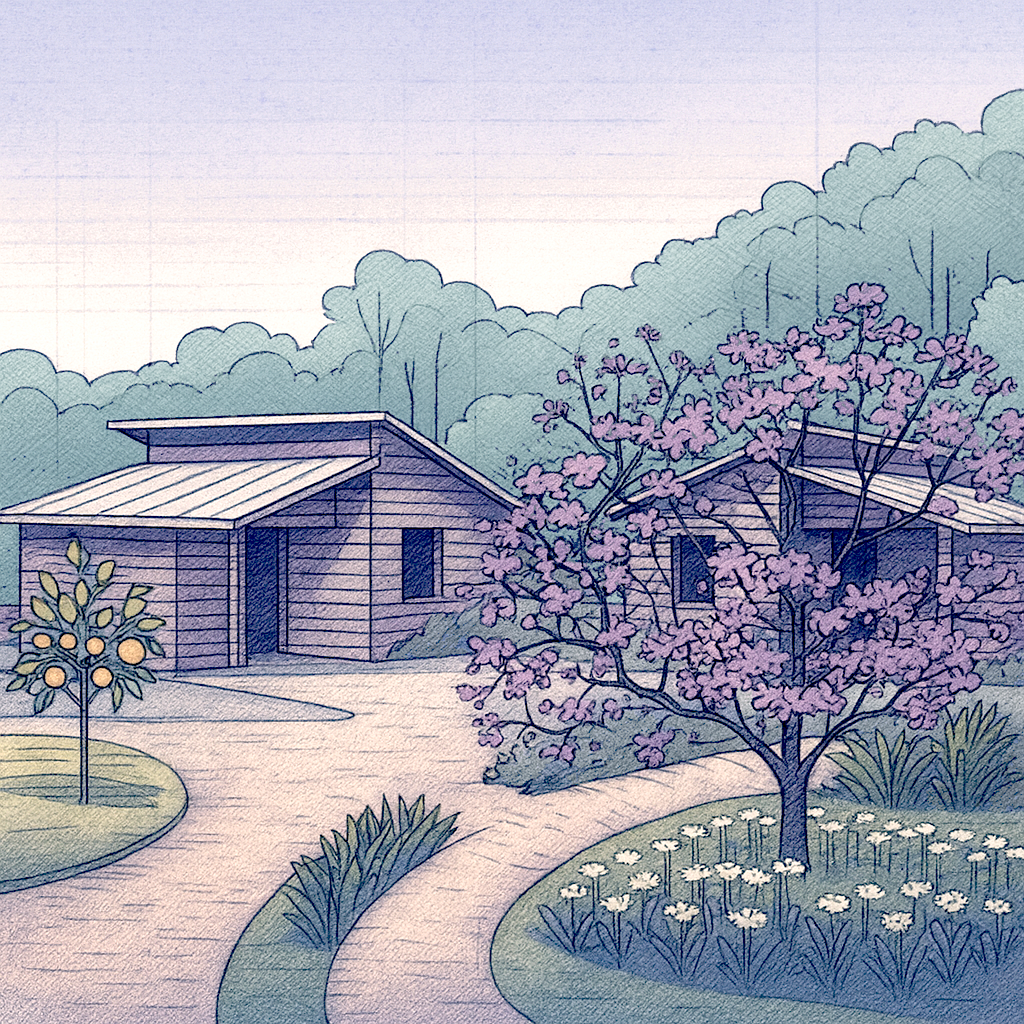
Ecotourism Center in Cameroon
Lead Architect · Systems Designer
Context
Masterplan and landscape design developed for AGRIPO (Agriculteurs Professionnels du Cameroun), a local NGO based in Tayab’s community. The project proposes a sustainable framework for local ecotourism that strengthens environmental stewardship and community participation.
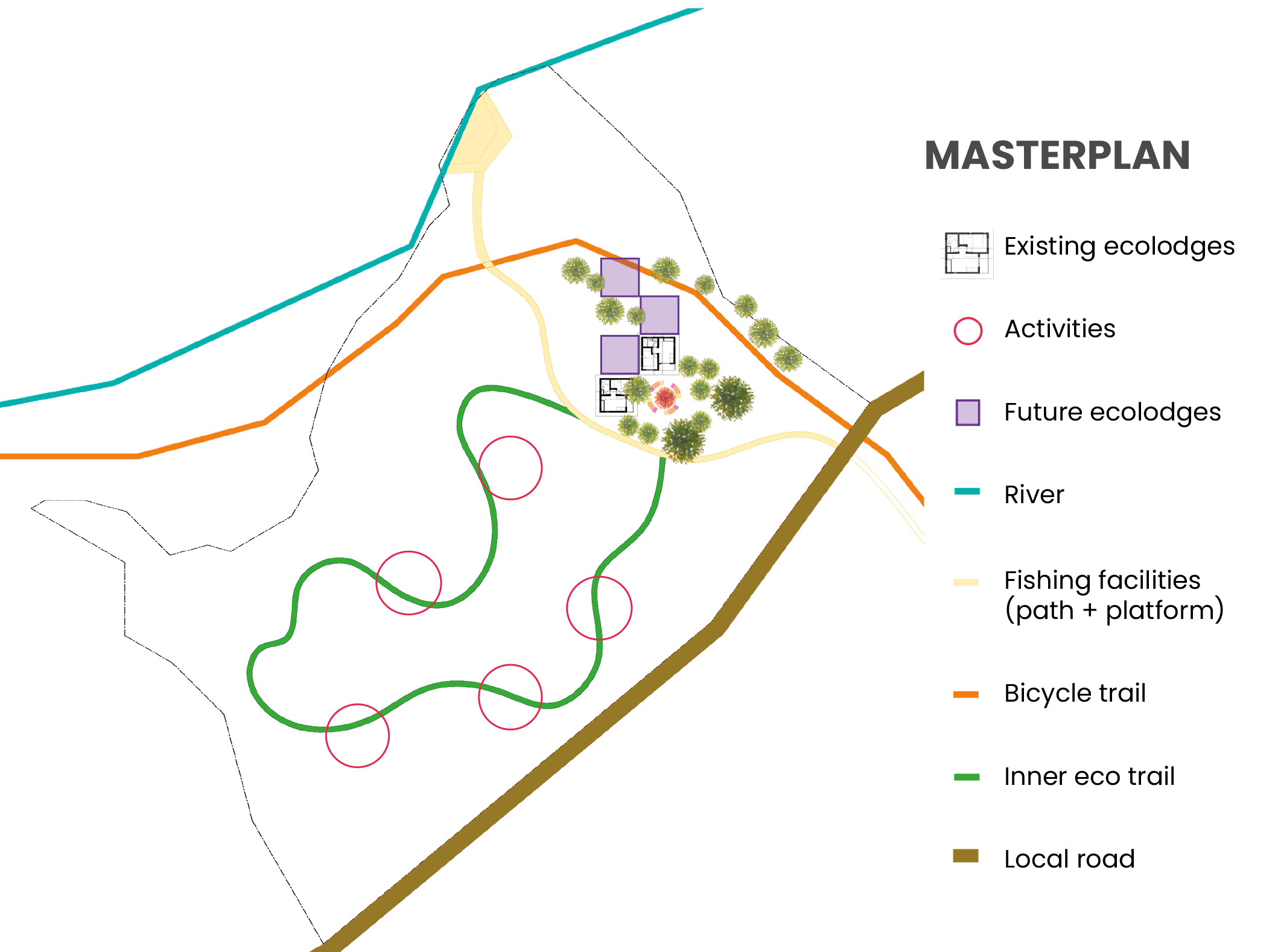
The site is located along a departmental road, connecting several villages in Cameroon, and covers 10,000 m² wwithin a broader natural corridor, integrating two existing cabins into a cohesive ecological system. The masterplan enhances these structures through spatial, ecological, and experiential strategies that invite visitors to connect with nature through landscape, while supporting local traditions.
Challenge
How can architecture and landscape design foster ecological awareness while minimizing environmental impact?
The project explores how design can mediate the relationship between people and their natural surroundings through sensory experiences related to local ecosystems. It approaches architecture and landscape as interconnected systems that evolve together — where spatial design becomes a catalyst for environmental empathy, collective learning, and sustainable coexistence.
Outcome
The Ecotourism Masterplan envisions a modular and low-impact system where built and natural environments coexist. It defines three main circulation paths: a bicycle route connecting nearby settlements, a trail to the fishing platform, and an internal circuit linking ecolodges with activity zones such as beekeeping and birdwatching. Each route merges recreation and education, allowing visitors and residents to experience the landscape as a shared, evolving ecosystem.
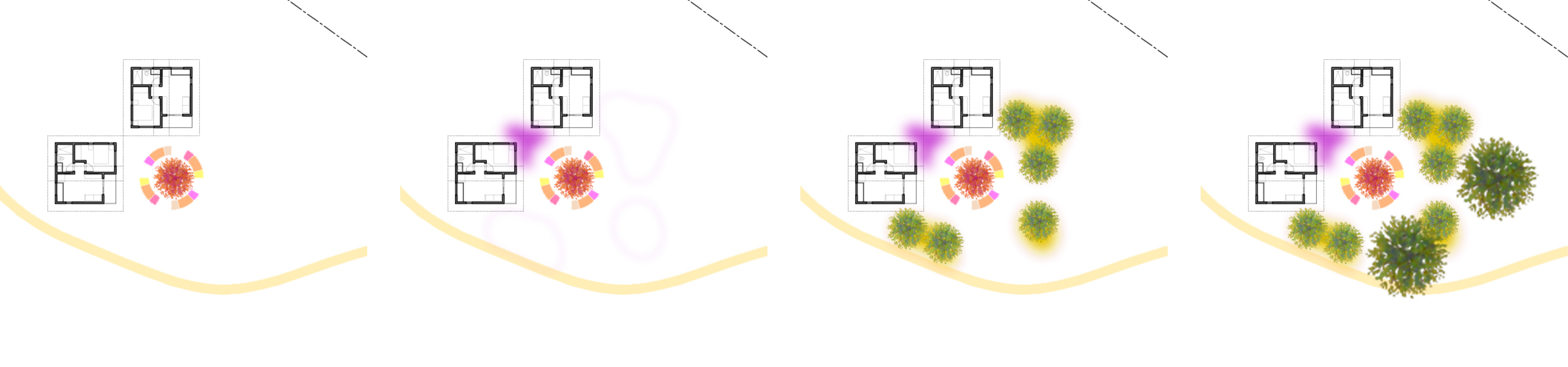
Landscape strategies include edible gardens with tomatoes, radishes, and cumin (rotational crops); fruit trees and native species such as Baobab and Moabi for orientation; and mosquito-repellent plants near the ecolodges. These layers of vegetation create microclimates and enhance biodiversity, transforming the site into a living laboratory for ecological awareness and coexistence.
Notes
Conceived and developed as an independent architectural and
landscape design project for AGRIPO (Agriculteurs Professionnels du
Cameroun), carried out through a volunteer collaboration facilitated
by the United Nations Volunteers (UNV) Online Volunteering
service.
Tools and resources: AutoCAD,
SketchUp, Adobe Illustrator, and Photoshop.
Key concepts: sustainable planning,
ecological restoration, participatory design, and community
resilience.