Hybrid Natures
Strategy & Systems Designer (Research-led) · Creative Technologist
I developed Hybrid Natures as an end-to-end research-through-design project exploring how hybrid physical–digital systems can foster awareness, empathy, and long-term engagement with socio-environmental issues. The project combines system logic, narrative design, and generative processes to translate complex environmental data into participatory experiences. It investigates how governance, participation, and collective action can be designed as experiential systems rather than abstract structures.
Context
Hybrid Natures is a research-led thesis project developed as part of the Master in Creative Computing at ELISAVA / UVic-UCC. It aims to explore how design and technology can support individual and collective engagement with environmental crises, approaching them as interconnected systems rather than isolated problems.
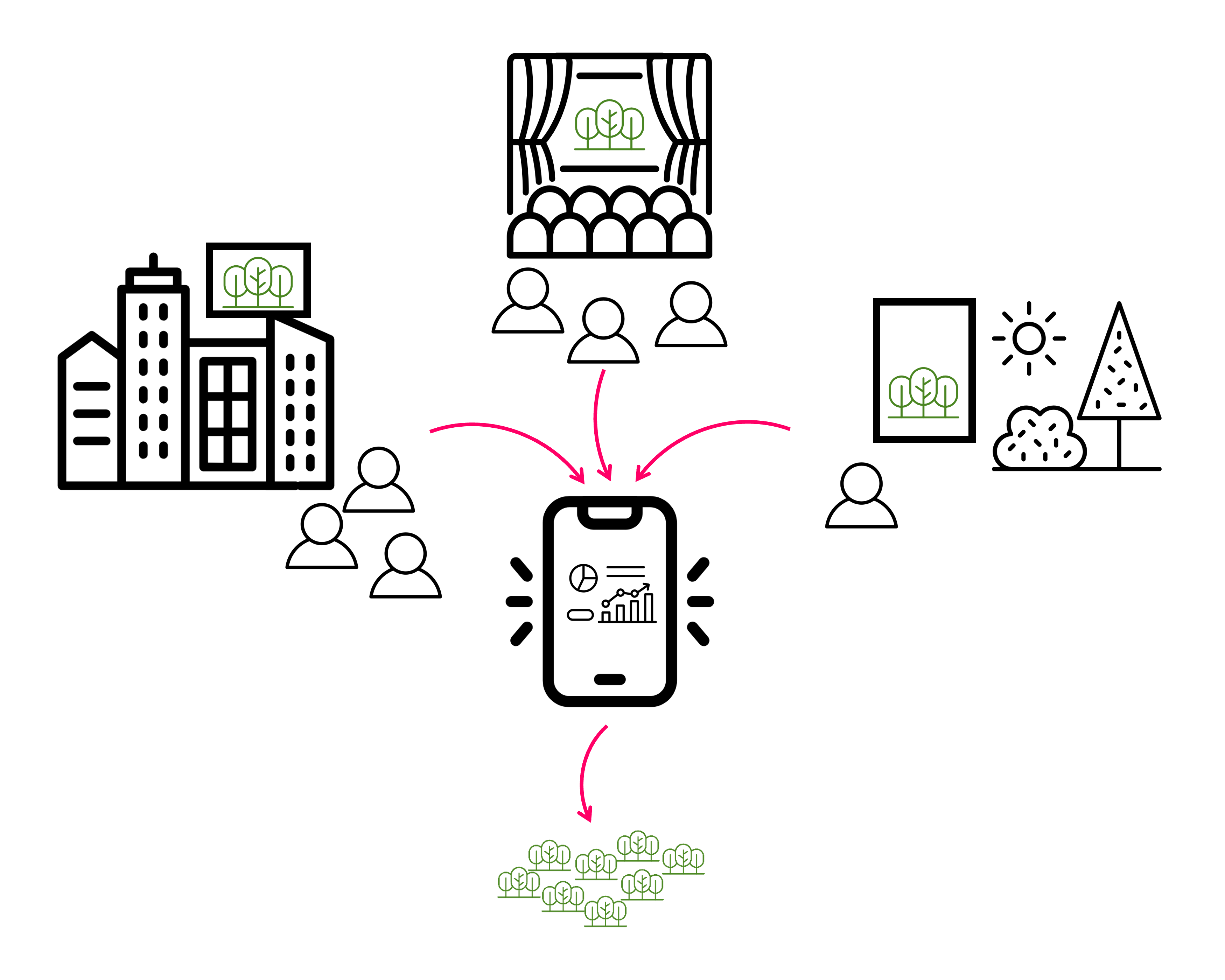
By integrating spatial and digital layers, the project connects people, communities, and ecosystems, treating data as both a design material and a catalyst for engagement. It investigates how interaction design, system logic, and narrative structures can foster new forms of empathy and participation around endangered causes. The first edition focuses on the Amazon Rainforest.
Challenge
How can design and technology help people understand and engage with human–nature relationships from a systemic perspective?
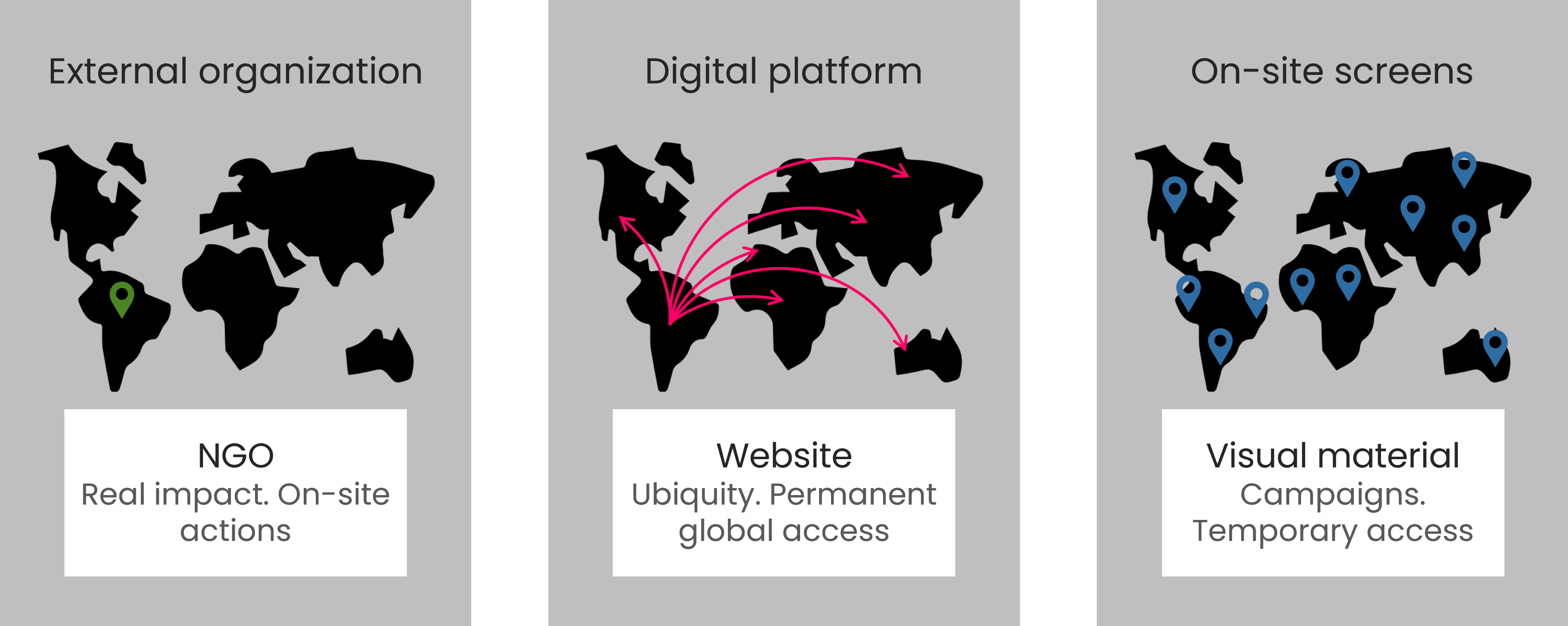
Hybrid Natures addresses this question through the design of a hybrid system that combines a digital platform with decentralized elements. The system was conceived to connect users with endangered territories and indigenous communities, translating complex socio-environmental dynamics into an accessible, participatory experience that supports understanding and involvement.
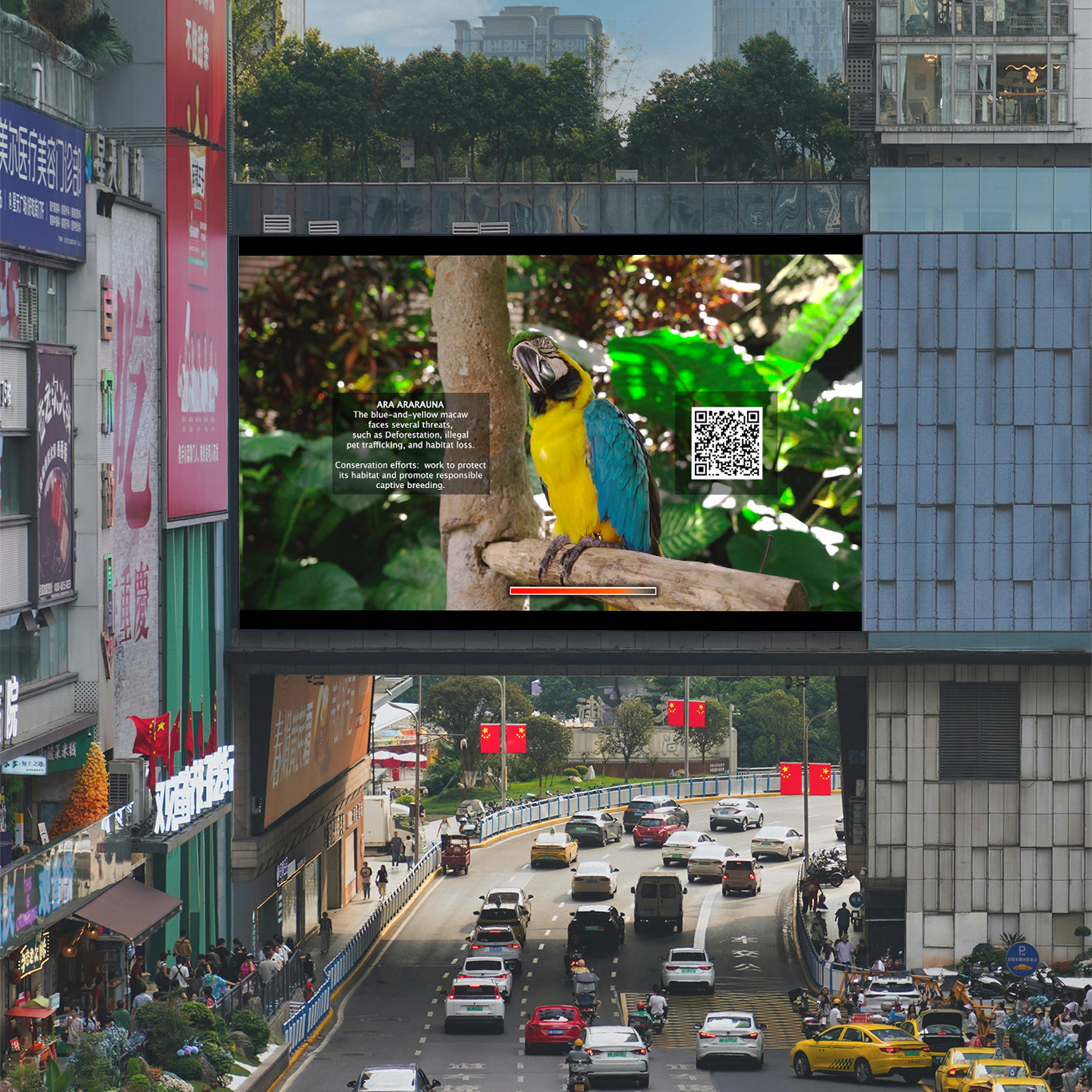
The digital environment was designed to be complemented by physical supports that display visual and audiovisual media, functioning as decentralized access points — or portals — to those ecosystems. These elements were designed to reduce abstraction and support users in forming clearer mental models of distant and often invisible systems.
Outcome
Hybrid Natures resulted in a functional digital platform and a series of implemented generative artworks, alongside a set of future-facing system extensions explored through design. The project balances what is built and deployed with what is intentionally proposed, using design as a way to test how participation, governance, and collective engagement could evolve over time within hybrid physical–digital systems.
The platform’s narrative was designed to unfold the Amazon Rainforest progressively — first highlighting the relevance of each selected cause, then revealing its vulnerabilities, and finally establishing a connection to the viewer’s everyday life. This sequence supports both emotional engagement and cognitive understanding, guiding users from awareness toward active participation.
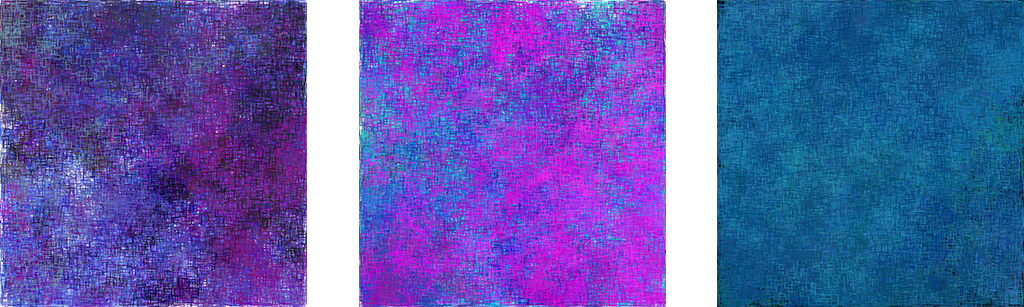
At this stage, Hybrid Natures introduces a series of generative artworks in NFT format, conceived as a participation and support mechanism rather than speculative objects. The artworks follow a tiered distribution model with variable donation percentages allocated to nonprofit organizations working with the cause. All pieces were created using p5.js and environmental data from the Amazon Rainforest, then minted, listed, and showcased on Manifold. This approach reframes NFTs as a participatory design mechanism rather than a speculative asset.
The proposal recreates a hybrid (physical–digital) experience that integrates data, imagery, and generative art within a service framework inspired by Web3 principles such as decentralization, transparency, and collective participation. Gamification strategies were intentionally designed to support long-term engagement, encouraging repeated interaction and a sense of shared responsibility.
Conceived as a future governance structure, the project explores governance as a designed service experience to support community involvement and decision-making over time. Each release would include a 10,000-edition badge as a collective participation layer, with a unique motif per edition. Token holders were envisioned to vote on the theme of future editions and on potential guest artist collaborations, framing governance itself as a designed service experience.
Key Learnings
- Governance mechanisms can be designed as experiential systems, shaping participation, ownership, and long-term engagement rather than functioning solely as administrative structures.
- Hybrid physical–digital access points reduce abstraction and help people build more grounded mental models of complex socio-environmental systems.
- Designing environmental data visualizations as narrative material—rather than purely informational—enhances both emotional and cognitive connections to real-world issues.
- Generative systems and NFTs can support participatory infrastructures when they are designed as meaning-embedded artifacts—aligned with transparency, collective intent, and non-speculative value frameworks.
- Contribution-based models that link culturally meaningful artifacts—such as generative art NFTs—to a specific cause can strengthen these governance dynamics, fostering community formation and sustained engagement beyond transactional donations by making support visible, situated, and recognizable as a shared affiliation. Digital environments further enable access, scalability, and long-term sustainability.
Notes
Conceived and developed independently as a functional digital
platform integrating research, design, and prototyping explorations.
The current version represents an initial phase of implementation,
with additional content planned for future development.
Originally created as an individual thesis project for the Master in
Creative Computing at ELISAVA / UVic-UCC (through SHIFTA).
All stages — from concept definition and web architecture to data
processing, content development, and generative artwork — were
carried out independently as part of the research process.
The project’s
website
presents data visualizations, within an engaging narrative about the
Amazon Rainforest, and a series of generative artworks later minted
through
Manifold, extending its exploration of decentralization and collective
authorship.
Presented at the
International Colloquium Extractivismos
(Argentina, 2025).
Tools and resources: p5.js, HTML/CSS,
and Flourish — integrating web development and generative systems
with AI-assisted iteration.