
HyperPlant
Interaction & Systems Designer (Research-led) · Creative Technologist
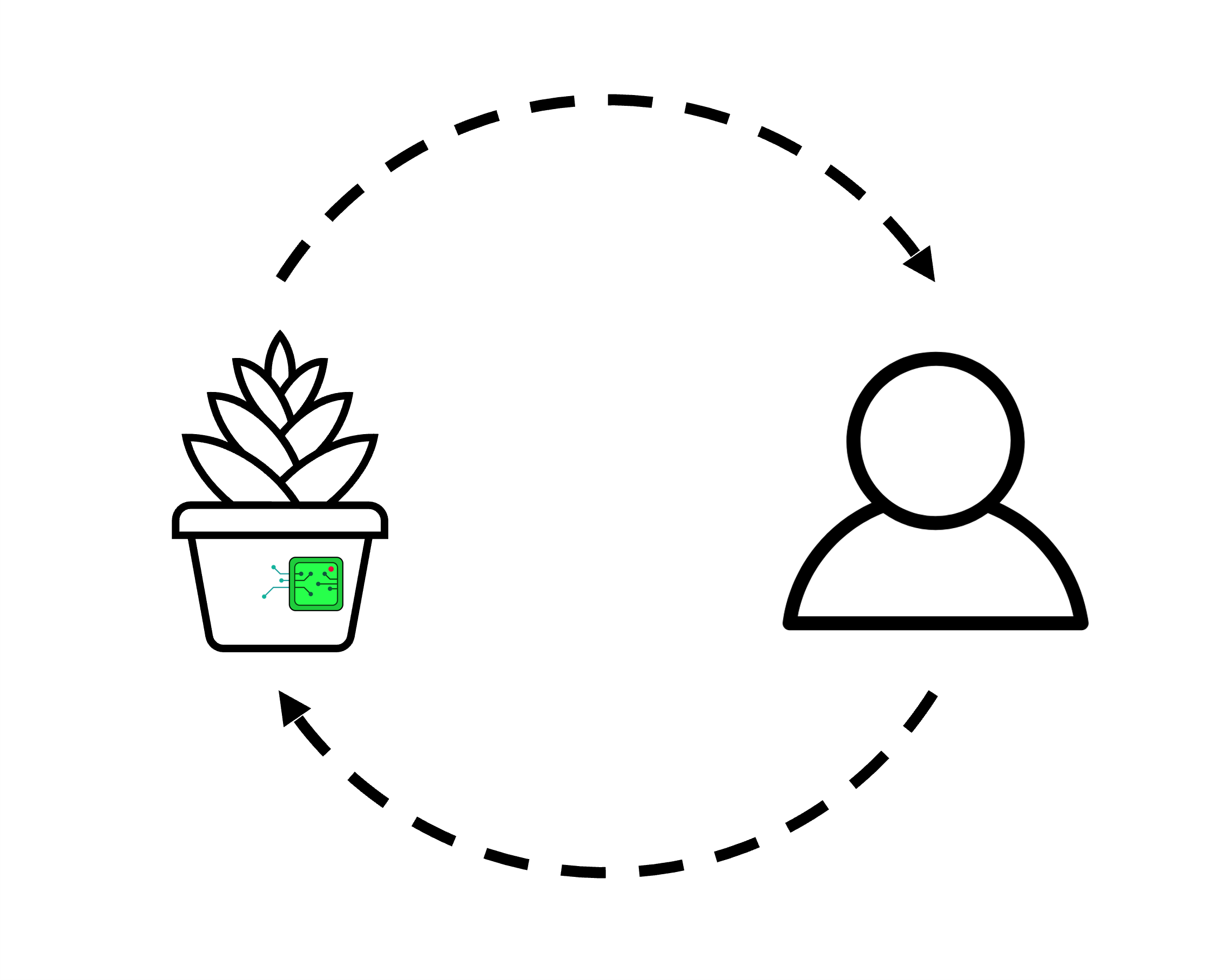
I created HyperPlant as a real-time bonding system that explores relational interaction between humans and nature at a micro scale, using indoor plants as the medium. I designed and prototyped an interactive physical–digital system that translates air quality and environmental data into perceptible feedback, enabling users to understand how human activities and plant processes co-shape a shared living environment over time.
Context
Current production and consumption models assume unlimited resources and reinforce a cultural separation between humans and nature. This project explores how interaction design and data-driven systems can challenge that paradigm by making environmental processes perceptible at a human scale.
HyperPlant investigates how multisensory, interactive systems can foster empathy and awareness by mediating relationships between humans and plants in indoor environments. Developed as a functional prototype, it proposes a framework for human–plant connection based on air phytoremediation and the perception of reciprocal care.
Challenge
How can interactive systems help people develop awareness, care, and responsibility toward non-human living systems?
HyperPlant is a one-to-one bonding system that translates environmental conditions into intuitive, real-time feedback. Embedded sensors (air quality, humidity, temperature) collect and stream data to a digital platform, transforming everyday objects into responsive elements.
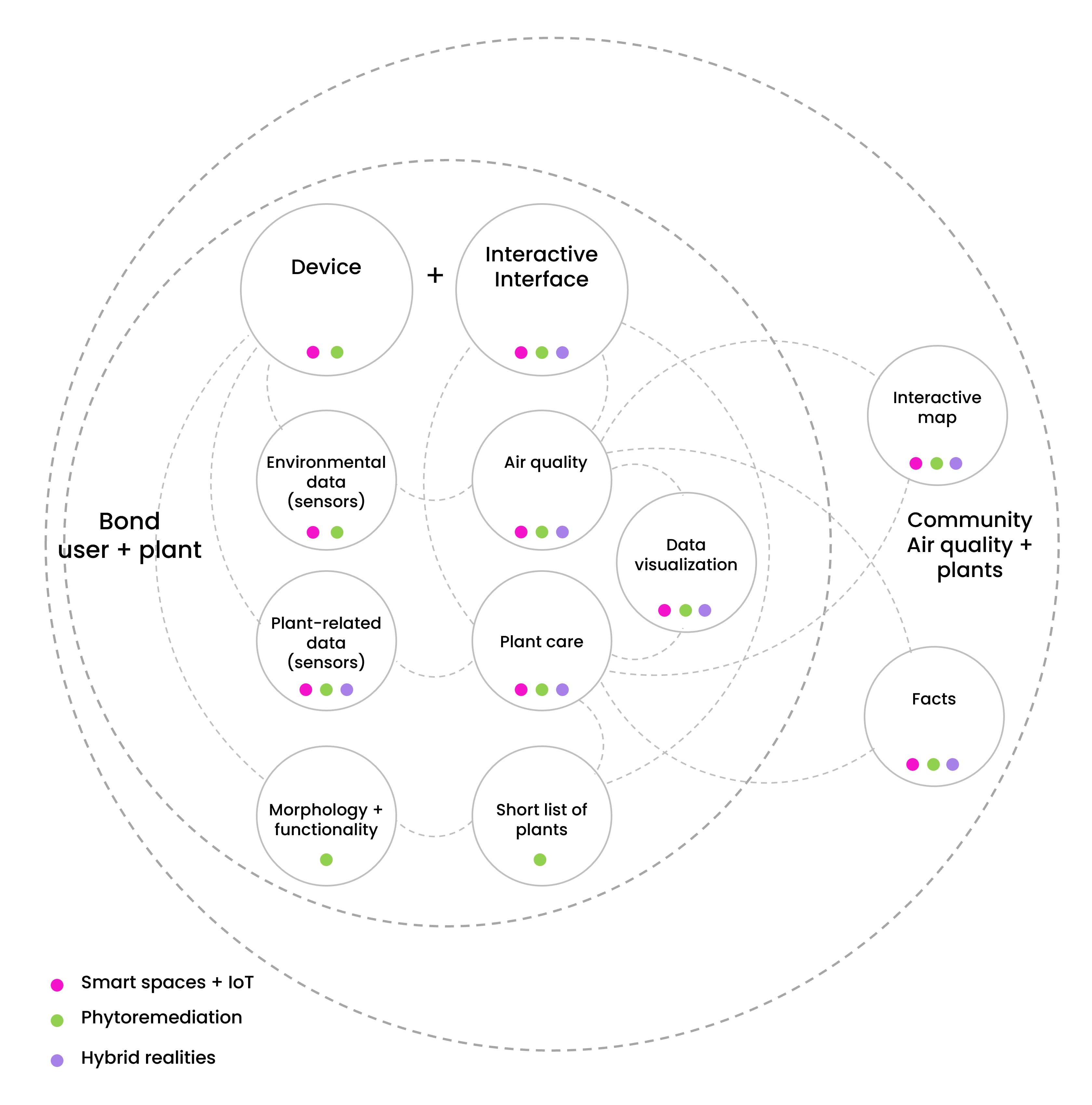
The project is grounded in three key concepts: bonding, smart spaces, and hybrid realities. The system extends the physical presence of the plant into a virtual space, allowing users to perceive care, neglect, and environmental changes as narrative feedback that informs behavior over time. Gamification mechanisms were introduced to support long-term engagement rather than short-term novelty.
Outcome
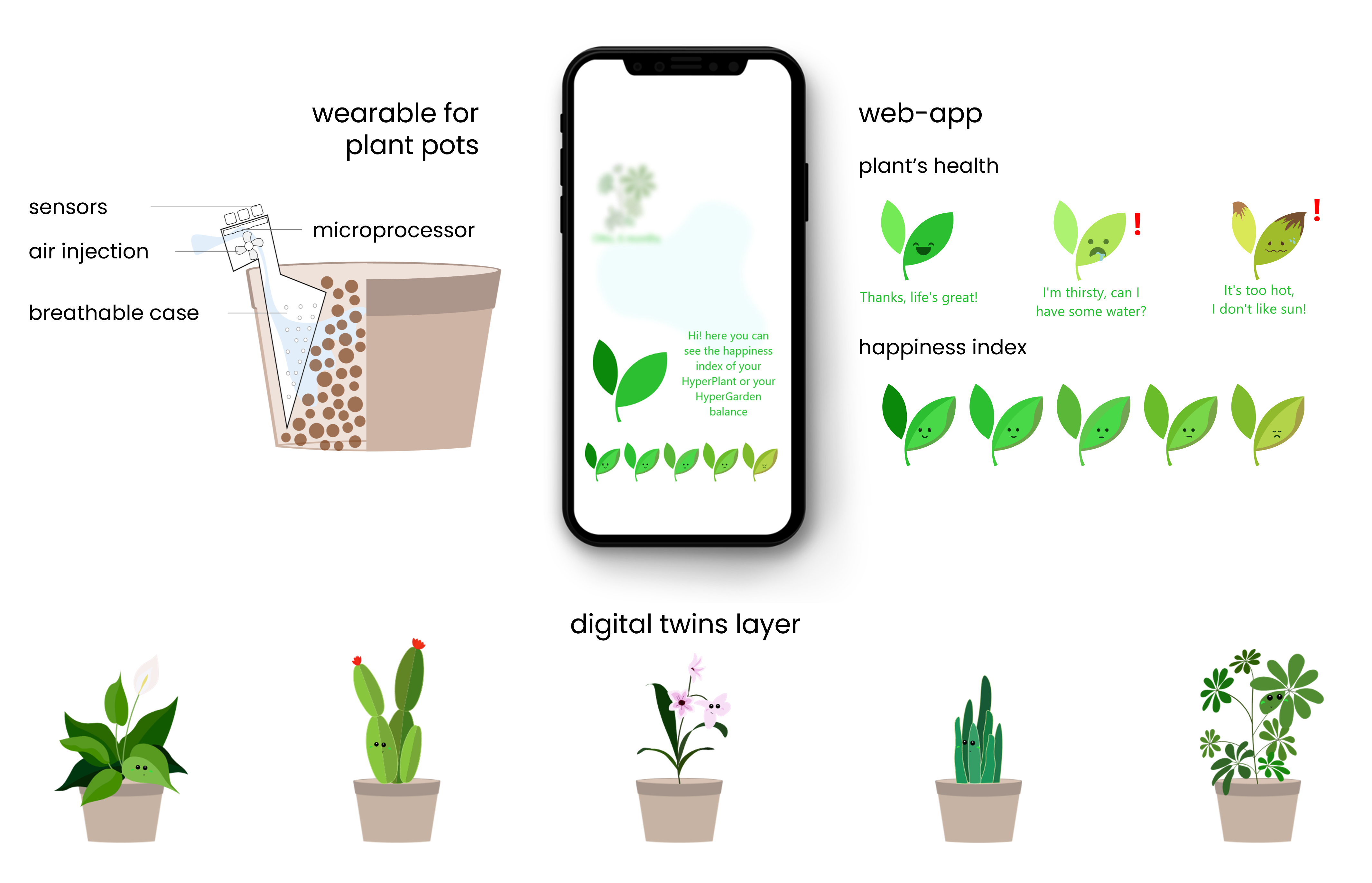
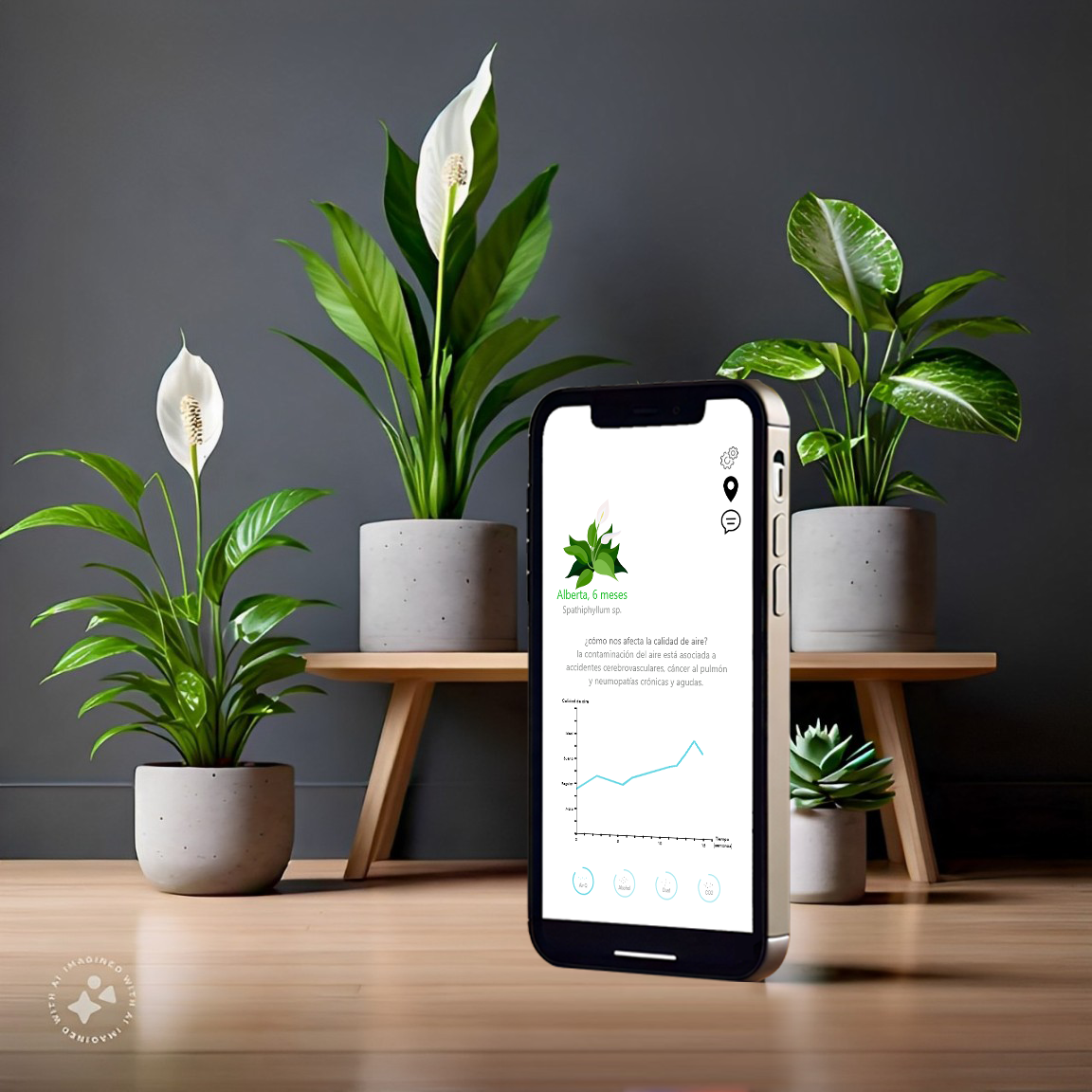
I defined, designed, and prototyped the system’s digital interfaces and interaction flows, and developed a functional prototype combining Arduino-based sensing, 3D-printed components, and a digital platform to test interaction and engagement hypotheses. Five plants were shortlisted to develop the avatars and introduce a sense of realism into the platform, strengthening engagement and attachment. Its gamified interface explores motivation while envisioning future possibilities for collective interaction.

During a one-week testing phase, the participant quickly developed an emotional connection with the plant mediated by its avatar. The user's diary revealed attachment, empathy, and growing awareness—confirming the potential of interactive media to strengthen interspecies bonds.
HyperPlant demonstrates how data, design, and narrative converge to create hybrid realities that bridge physical and digital experiences. It positions interaction design as a tool to cultivate awareness—not only of environmental conditions, but of the affective ties that shape coexistence within complex living systems.
HyperPlant reflects my approach to designing hybrid systems where interfaces are intentionally designed as clear interaction layers — supporting understanding, trust, and long-term engagement across physical–digital ecosystems.
Through this project, I explored how data visualization combined with narrative feedback can generate emotional engagement beyond information delivery. I learned how hybrid physical–digital systems can translate invisible environmental processes into meaningful experiences, informing the design of connected products, smart environments, and long-term engagement ecosystems.
Key Learnings
- Translating environmental data into real-time sensory feedback helps people perceive ecological processes as relational and ongoing, rather than abstract or distant information.
- Making visible how human actions and non-human processes continuously influence a shared environment supports environmental awareness and long-term engagement through interaction.
- Designing at a micro scale (domestic, one-to-one systems) enables users to build clearer mental models of complex environmental interdependencies through everyday experience.
- Hybrid physical–digital systems can extend non-human presence into digital space, supporting affective engagement and sustained attention over time.
- Narrative and gamified feedback are most effective when paired with a physical element beyond the digital platform, reinforcing cohabitation and reciprocity within shared environments.
Notes
Conceived and developed as a prototype exploring empathy,
interaction, and environmental awareness through data, hybrid
realities, and gamification. The learnings inform future product and
service concepts and interaction models.
This is my
thesis
project for the Master in Interactive Design at the University of
Buenos Aires. Watch my
dissertation.
Previous versions of HyperPlant were presented at the Chinese
Conference on Bio-inspired Design and Technology (China, 2020) and
The International Image Festival
(Colombia, 2021).
Tested in Lima, Peru, within a research-driven framework integrating
descriptive and prescriptive design stages.
Tools and resources: Arduino, digital
fabrication, HTML/CSS — combining environmental sensors and
narrative systems with AI-assisted iteration.