
VeggieLab
Lead Architect · Systems Designer
Context
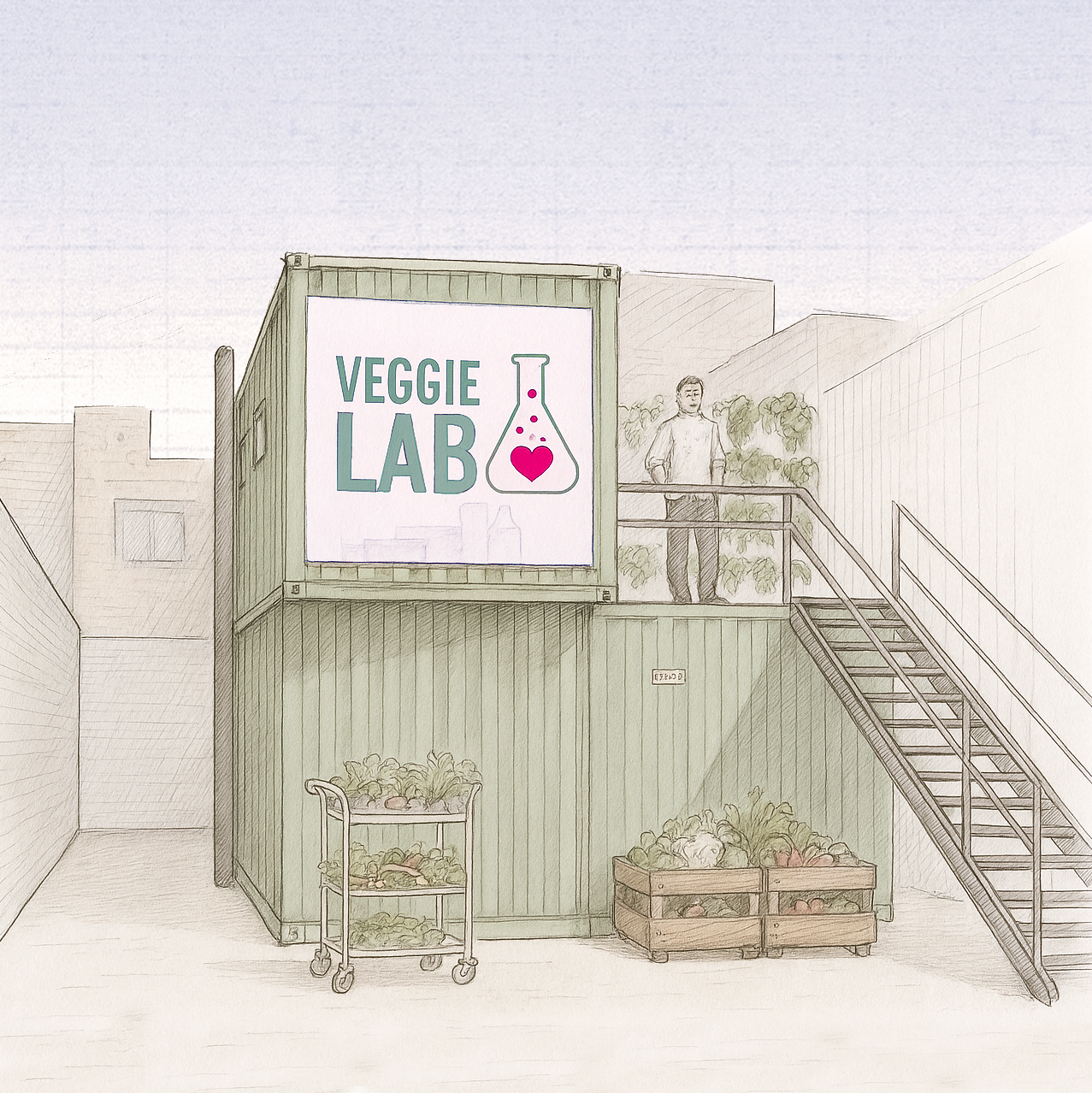
VeggieLab is an architectural proposal that integrates spatial design, sustainability, and adaptability. Conceived for a food service company focused on plant-based gastronomy, the project explores how architecture can embody ecological values through flexible systems and circular strategies. The site offered both opportunity and constraint: a small rental space requiring sanitary upgrades and a layout capable of scaling with the business as it evolved.
Challenge
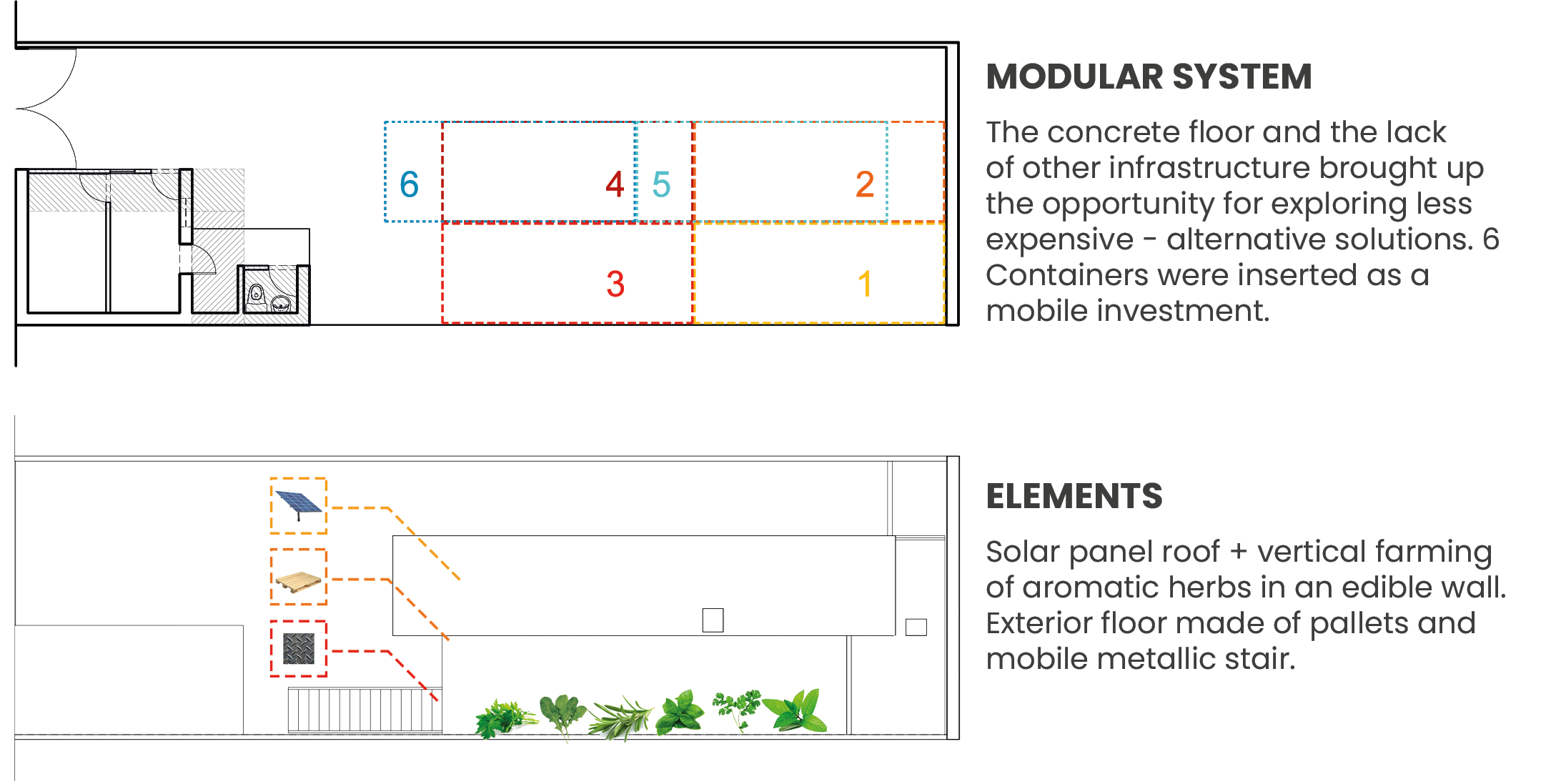
How can architecture respond to short-term tenancy while remaining ecologically responsible and coherent?
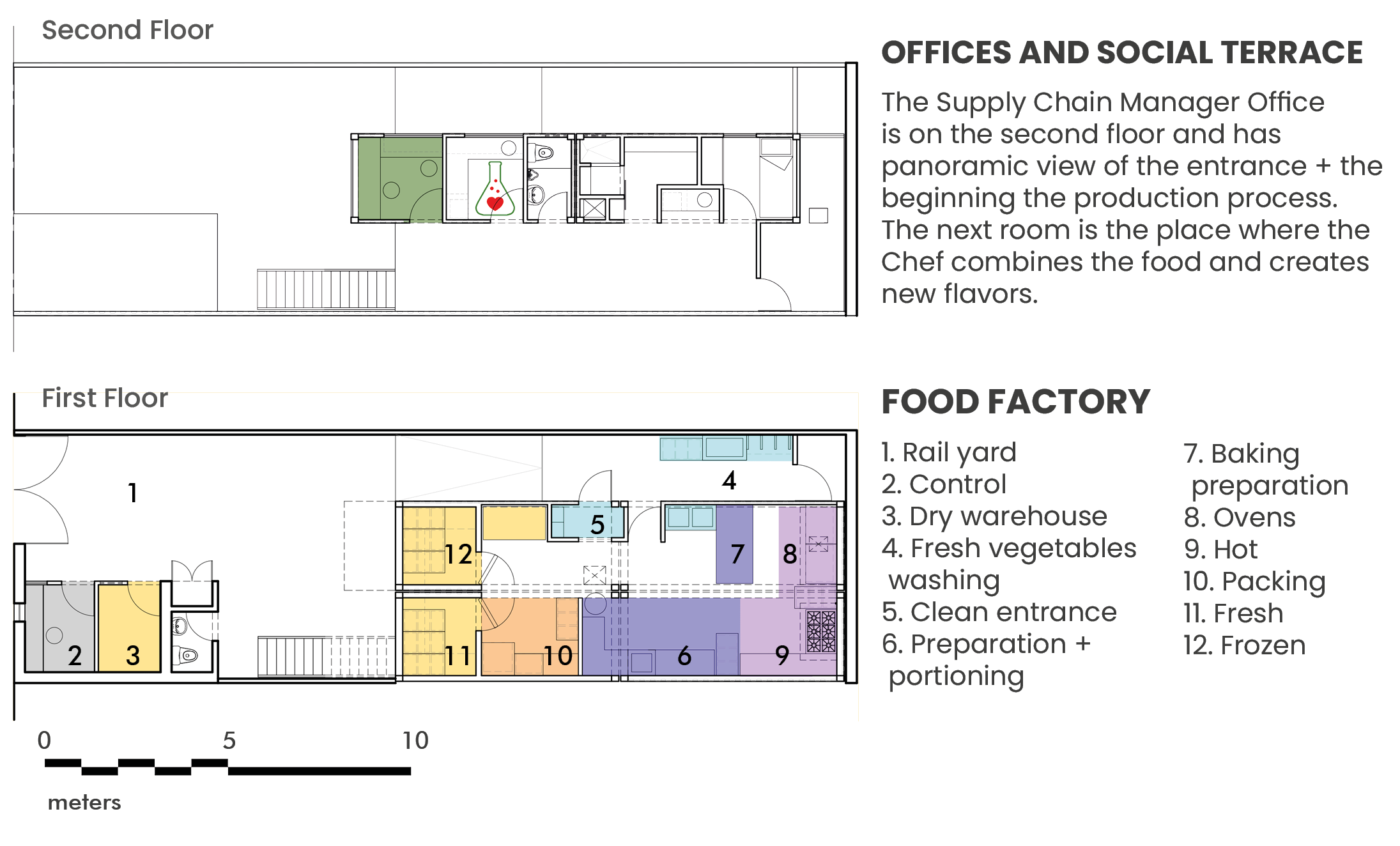
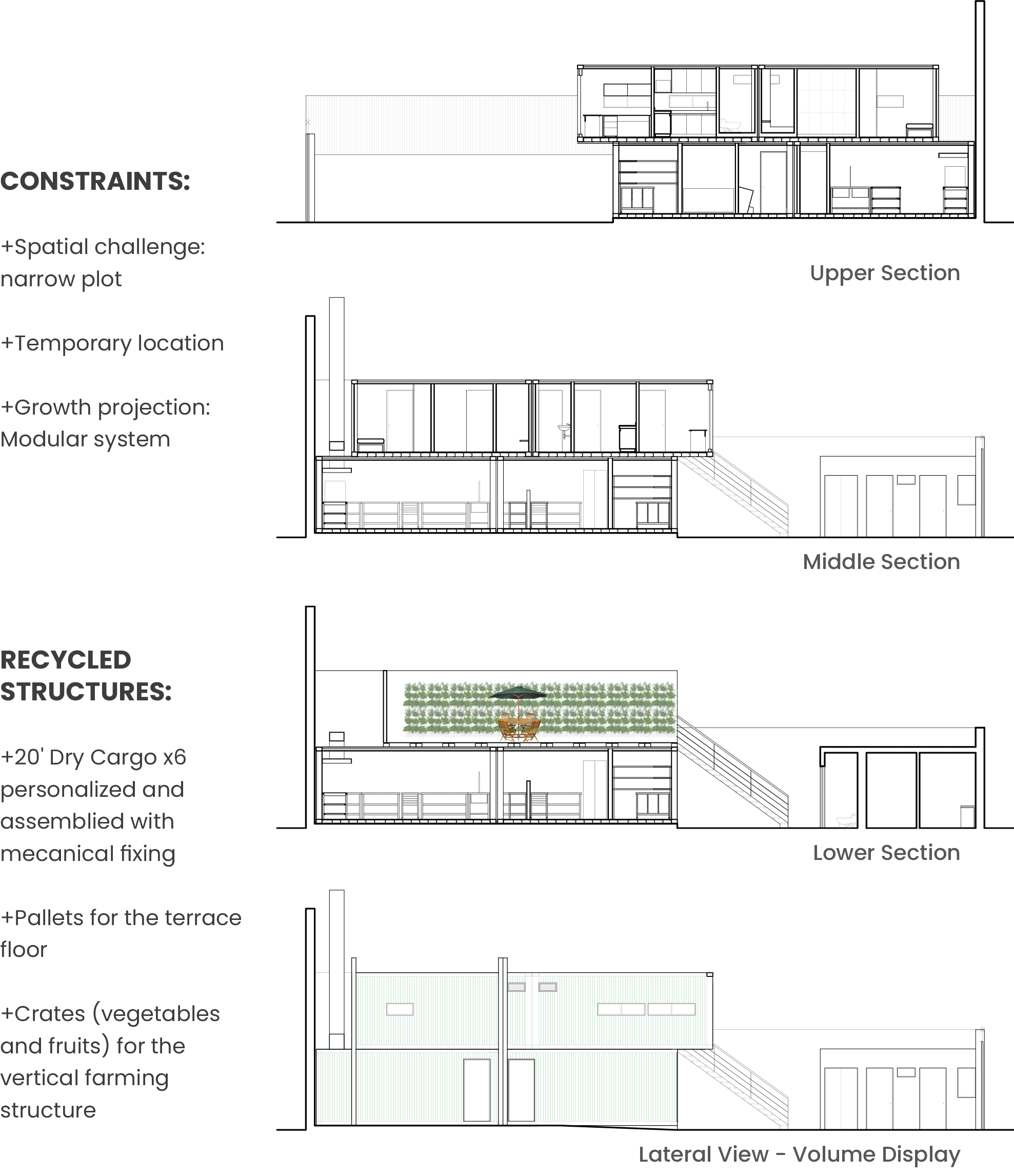
The proposal incorporates six recycled 20’ shipping containers, fully refurbished to serve as the primary structure. This strategy combines rapid deployment with the ability to relocate or reconfigure modules as needed. Mechanical joints (instead of welding) allow for disassembly and reuse, while selective demolition and retrofit of the existing structure ensure accessibility and precise placement. A terrace and an aromatic herb wall complement the interior program — supporting creative work and reinforcing the project’s plant-based ethos.
Outcome
Although the project was not implemented due to external factors, VeggieLab demonstrates a scalable and sustainable approach to food production spaces. It highlights the potential of modular architecture to adapt to economic and environmental shifts while maintaining design quality and spatial identity. Solar panels were planned for the roof, completing a self-sufficient system where energy, nature, and design converge to support circular thinking.
Notes
Developed as an independent architectural proposal for VeggieLab
(Peru).
Tools and resources: AutoCAD,
SketchUp, Adobe Illustrator, Adobe Photoshop.
Conceptual framework: adaptive reuse,
modular construction, and circular design strategies.